
Bloom vs Brick – Which App Blocker is the Best?
Ever since Facebook started to force creators with pages to pay for Meta One to post links, I have done everything in my power to try and get off social media as much as possible.
Yes, I need to be on it for work- sometimes even for long periods of time (sadly). But given that the rest of it is one giant time suck, with most feeds not even showing me what I want to see these days, it felt like a good time to do something about it.
One lament I always had was that my phone does not have easy ways to set app restrictions inherently. Phone producers, much like social media, seem to really, really want you on your phone all the time. So, we had to start searching for 3rd parties to find a solution that worked for us as simply taking apps off the home screen only worked so well.
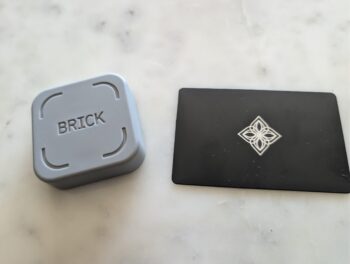
It was because of this that I discovered two devices/services that can block apps, Brick (a tappable square device) and Bloom (a credit card-shaped device with a new tappable device like Brick), and decided to try out both to see which is better!
Although you could argue pros and cons for each, and may find your personal scenario lends you to one over the other, I wanted to break down some of these similarities and differences in this one as, to be honest, they’re both very similar!
Note: I am still working my way through all the functionality on these devices and my opinions may change in the future. This article is based on my initial testing on each device. This review may be updated in the future if any extra opinions, quirks, or other scenarios present themselves that I have not noticed yet.
Meta One Subscriptions Made Me Change My Ad Budget to $0

I’ve been a user of Facebook since the early days- back when it was The Facebook and only accessible to current college students at a handful of universities. Yes, the early, early days.
Naturally, I’ve always had a strong presence on the app for my many blogs, as Facebook was historically the best social network out there to find new fans, build and reach an audience, and grow a small business (particularly for my local blog thanks to the app’s historically great ad location-based targeting tools).
In September 2026, Meta rolled out new subscriptions for professional pages, known as Meta One, which includes finite link shares (which are now heavily limited outright), and more at rates ranging from just a few dollars a month to upwards of $499 per month for unlimited link postings.
But because this came along with restrictions in how many free links accounts were able to post in any given month, I had a decision to make, and that decision was I have dropped my advertising spend on Facebook to $0.
Facebook ads are now no longer a part of my marketing plan and seemingly won’t be for the foreseeable future.
10 Steps to Start a Blog on a Track to Success – 2026 Edition

If you are considering starting a blog, you may find sorting through all the options to get started a bit dizzying.
I know I did.
But after being in the industry for nearly 20 years, there are thankfully many great services and tools out there to get started blogging on the right foot.
So in this one, I wanted to lay out the steps I’d take to start a blog in 2026 that will hopefully put you on a track to success!
- Notes: We recommend reading through this entire list before taking a single step, as many of the steps are more intertwined than sequential. For example, you’ll likely want to verify social media handles are available for your ideal brand/domain name before registering your domain, or you may want to publish blog posts before registering with Search Console. Since so many things go hand in hand and could be done concurrently, we need to keep the big picture in mind alongside these focused details. This is why our first three points will focus on developing your blog idea before a single penny is spent setting up a site!
- These recommendations are what we would do if we were launching a professional blog with the intent to build traffic and monetize. You do not necessarily need to do any of these recommendations if you are just pursuing this as a hobby. That said, we still recommend it as these are conventional best practices because you never know what the future may hold.
5 Social Media Conspiracy Theories That Could Have Legs

Who doesn’t love a good conspiracy theory?
In the world of blogging, content creation, and social media, there are a ton of them that are, we’ll be the first to admit, very outlandish.
But still, many conspiracy theories have some kernel of truth in them, no matter how small (whether we know about it or not!), and that is where things can get rather interesting.
So let’s put our tinfoil hats on and talk about some social media conspiracy theories that are out there right now!
Note: These are all conspiracy theories we have heard in passing that, to be clear, are likely nonsense. While we cannot say that any of these are actually true in this reality, given everything going on, we wouldn’t be surprised if some elements are more spot on than we realize.
A Blog Caching Setting That May Impact Ad RPM Calculations

After switching my local blog from Mediavine to Raptive in late 2025, I have had a bit of an unhealthy obsession tracking my year-over-year performance in RPMs to figure out if one network performed better than the other. (I have the full data on Mediavine vs Raptive so far here.)
But around March of 2026, something interesting happened- my RPMs cratered from YoY increases of +40-50% to YoY decreases of about 5%.
That is a massive swing which, on the surface, could have some strong implications on network-to-network performance.
But after doing a deep dive into my ad analytics and talking to Raptive directly, we found an interesting setting change that was the most likely culprit here- we switched from WP Rocket to Perfmatters for caching. In doing so, we stopped deferring Google Analytics from loading, and the new setup started tracking a lot of short pageviews that previously were not counted, and our RPM calculation changed dramatically. (Raptive has an article on this, too, and our experience syncs up pretty well.)
It turns out, it likely had little to do with network-to-network performance at all, and was primarily due to a tracking change!
So in this one, we thought we’d break down what we saw, how we figured this one out (assuming this theory is correct, of course), and share a bit about why all of this is important only really if you engage in benchmarking.