
Published by Jeremy. Last Updated on August 24, 2026.
Disclaimer: This Week in Blogging uses demographic data, email opt-ins, and affiliate links to operate this site. Please review our Terms and Conditions and Privacy Policy. To see more of our content, set us as a Preferred Source in Google.
Who doesn’t love a good conspiracy theory?
In the world of blogging, content creation, and social media, there are a ton of them that are, we’ll be the first to admit, very outlandish.
But still, many conspiracy theories have some kernel of truth in them, no matter how small (whether we know about it or not!), and that is where things can get rather interesting.
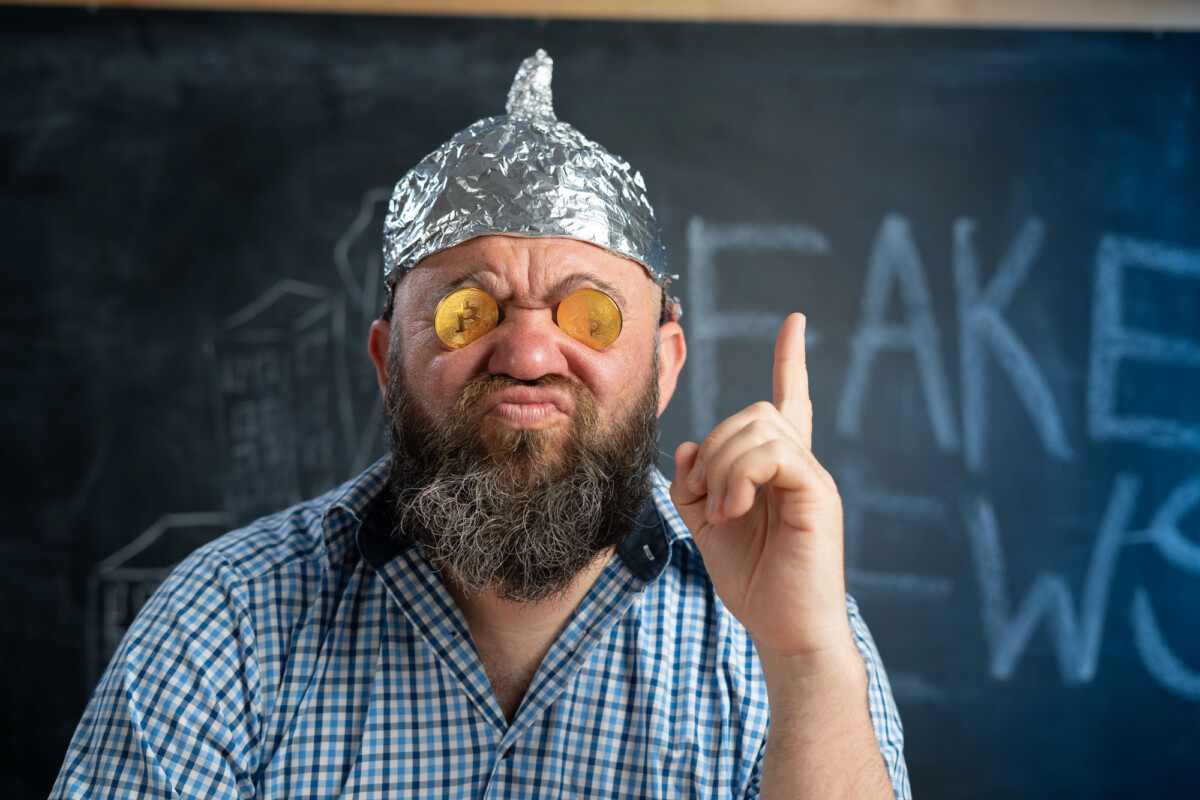
So let’s put our tinfoil hats on and talk about some social media conspiracy theories that are out there right now!
Note: These are all conspiracy theories we have heard in passing that, to be clear, are likely nonsense. While we cannot say that any of these are actually true in this reality, given everything going on, we wouldn’t be surprised if some elements are more spot on than we realize.
Algorithms Reward New Content, Not Good Content
Ever since social media took over the world, the premise was always clear- it is a way to connect to your friends, family, and fans online. You connected, friended, or followed a person/page and had a reasonable expectation that you would periodically see their content.
This worked out pretty well until TikTok burst onto the scene and revolutionized social media with their novel discovery algorithm that other networks immediately copied.
Discovery is, to me at least, a double-edged sword. It is a great feature to have your content be seen by new people who don’t follow you yet, but comes at a seemingly direct expense to those who already opted in to see your content via the like and follow button-particularly since so much of any given feed is Discovery content these days with very little presence from anyone we actually follow.
Now, when posts do well, content is often not pushed to more of your existing followers (you know, the ones who clicked a button to opt in and see your content- the very same I’ve spent thousands upon thousands of dollars in marketing to try over the years and get to follow me), but rather starts getting pushed to strangers that a back-end algorithm selects as being possibly, maybe interested in.
I don’t know if your feed is anything like mine, but I hate damn near everything I see even if it is remotely in my interest orbit.
From a marketer standpoint, though, there is a trend that many in the industry are starting to notice as part of this. It isn’t just that you have to post “good” content that is engaging. Yes, there is a feedback loop where “good content” is determined by the first people who engage, such that higher engagement gets more of a push algorithmically- including to non-followers. But for a lot of that to even start, the conspiracy theory out there now is also that new content is arbitrarily doing better, too.
We could go on tangents here about why this could be bad for the industry, as we all can probably cite examples of creator burnout and how the obsession to do new, new, new and first, first, first takes a toll on mental health. But more to the point, seemingly gone are the days when you can build a portfolio and market it successfully on social media in the long-term. New is in!
Why this conspiracy theory could make sense: I’ve seen observations like these firsthand. Photos I capture and post the same day often do much better than content I took months or years ago, even with fresh and engaging copy. These could be much worse quality/topic/niche-wise and still do rather well in being new. This could also be one explanation why new influencers who have no following are also seemingly blowing up these days, because everything they create is new, whereas legacy creators may rely more on a larger portfolio that recycles older content. Whether old content is penalized outright remains to be seen, but it is certainly a trend that may warrant more observation.
- As a side note- I often wonder what incentive I have to pay for advertising when “good” content is automatically pushed out to non-followers. I sure as hell am not paying to reach my existing followers, and the algorithm does the rest. So I’ve drastically reduced my advertising on social media by upwards of 66%, if not more, as the value proposition of social media advertising, to me at least, is almost entirely gone.
Topics Are Now Becoming Popular in the Algorithm, Too
I am thankful to have several rather large fan bases online, and in the past, I could almost always rely on a baseline “good” performance of content purely because I had a lot of followers who wanted to see my content- whatever the topic.
As mentioned in the previous point, that has changed immensely with Discovery feeds pushing out content to non-connected users, and content that I created a long time ago tends to not do very well at all- except for a few key topics that always seem to blow up no matter when I post them.
This conspiracy theory would suggest that topics and accounts can get flagged in the algorithm as inherently popular and may be arbitrarily pushed out more no matter who posts them. Case in point: every stupid trend out there that has gone viral that everyone immediately copies, which also seemingly does well for all those people- even after the trend should’ve flamed out.
Is it good content that warrants the feed pumping out more views because of individual post engagement, or is the algorithm pushing out more views because it knows ahead of time that the topic itself will generate engagement? It’s hard to say. But I think I can speak with some degree of confidence that no one wants the 37 millionth dance video or 5 millionth guy-with-signs hawking brand products in their feed, yet here we are. (No offense intended to the first person to dance on social media or original guy-with-sign- we like novel thoughts here.)
Why this conspiracy theory could make sense: I have a very slim collection of businesses on my local site that I can post about and, without fail, will blow up into viral shares every single time- no matter what caption I put on it. Not just for me, but anyone who posts it- so much so that there is a growing industry of creators that rush out to things that are trending just to get their own viral clip because the algorithm is seemingly rewarding the topic. Myself, fellow creators with big followings, and new creators all seem to have posts blow up for these topics/businesses, and it happens even if the content was originally created months or years ago, too. Is it trending and “good content” that would do well regardless, or is it being arbitrarily identified as popular and inflated algorithmically? We would love to know.
- Bonus conspiracy theory: We’ve heard variations of this notion that apply it to individual accounts that blew up enough times that they always seem to go viral despite thin and, quite frankly, boring content. This is where people accuse other creators of buying likes/fans because their popularity just doesn’t make sense. But honestly, a conspiracy theorist might just point at the algorithm and be more on the nose here. It certainly feels like there are pre-selected “winners” in this space anymore.
Bots Have Taken Over Social Networks – Who Runs Them?
Bots are plaguing social media in many ways, be it for pushing out content and “opinions” meant to persuade a certain subset of the population (see: election interference tactics or more traditional engagement-bait), buying fake likes and comments via bot farms so creators can have the optics of being “popular,” and so much more.
But if we take a step back and look more broadly at this topic, most users are likely well aware of the plague of just bad content going out these days that we just can’t fathom being created by a human. A selection of trends I’ve seen in my own feeds that make me scratch my head (that are recommended to me, not followed by me, mind you) include:
- AI slop with fake images that people seem to still engage with and treat as real despite being obviously fake
- Nonsense historical/event summaries repurposed with imagery that the original poster has no experience with and just rewrote Wikipedia
- Text copy that is all massive run-on paragraphs when it should’ve been 15-paragraph essays
- Faux experiences with clearly incorrect copy that makes zero sense to anyone who knows what is going on
- The inundation of accounts posting regurgitated hot takes that didn’t even make sense the first time
- …and all of this multiplied out over countless profiles, pages, groups, and more, that all seem to do really, really well despite having virtually no followers
This has become such a problem that even my mom has mentioned to me on countless occasions just how bad social media has become!
I suppose we could just stop and question the intelligence of the average social media user, where I just gesture broadly and leave it at that. But the conspiracy theory is more or less akin to dead internet theory, where it is fake by design– both the posts and many of the comments, designed to look popular to you (or even trigger you), the user, who is encouraged to stay on the app more and see more ads.
The questions are perhaps twofold, and currently have no answer. First, who runs these accounts and benefits from their existence? Second, who has the data to find out what content is doing well at scale to repurpose it at this volume? We’re not quite sure we want to know the answer to either of those.
Why this conspiracy theory could make sense: In a decent percentage of copyright infringements I’ve seen, not only are a page’s most popular images taken and reposted to pages, groups, and profiles, the exact copy is included, too– and it often does better than from the person who originally created/posted it. Now, this could just be lazy posting from people who need to get a life, or from people who clearly don’t know/care about copyright infringement, but it does make one wonder how much of this is real, how much is programmatic, and, most important of all, who is running all of it.
Copyrights Don’t Matter Anymore
One major frustration I have with most social networks is that they exploit what some would argue is a legal grey area regarding copyright infringement in user-generated content.
Anyone can post a photo to social media. It doesn’t matter if they created it and own the copyright. Anyone can post anything, anywhere, however they want, and it will go live for the world to see. Theoretically, tracking technology exists where copyrights could (and should) be flagged (I’ve used 3rd parties to monitor where my images show up online outside of my business- the tech exists), but that also requires a lot of computing power to implement- so I can see why it is perhaps not done at scale if anyone wanted to make that argument, even if I think it should be there by default.
But the problem is what happens after a creator finds an infringement.
Can you sue the person who posted it? Maybe, but good luck pursuing that on a UGC site. Are the social networks culpable for allowing the post to go out? Apparently not, at least with current laws. And who do you report it to? Oh, the social network directly, who may or may not decide to remove it, may or may not do any of it in an appreciable period of time, may or may not still allow the infringer to benefit from things like social bonus revenue on work they didn’t create, may or may not continue to prop up the same accounts via discovery algorithm reach, and may not do anything long-term to stop a serial infringer from continuing to steal content that happens to be popular.
We suppose that the conspiracy theory here is a bit tangential to the previous one, and perhaps best asked in the form of a question: who is benefiting at scale from these creator copyright violations? Let’s be honest- it could be a lot better.
Why this conspiracy question has merit: The entire premise of copyright only works insofar as it is enforced. There is a reason many brands can (and do) lose copyright if they do not pursue their infringement claims. While some social networks do, eventually, remove reports of infringement (and I have even seen groups/pages taken completely offline for repeat offenses), many questions come up when content theft is so rampant and recourse feels so limited that it almost feels that way by design. But, hey, anything for engagement, right?
Followers Are Irrelevant, and People May Be Redundant Entirely
A final social media conspiracy theory is perhaps a culmination of all of these things put together.
If anyone can post photos on social media, and bots/AI can train and identify popular topics with the algorithm, perhaps even publish infringements outright, no one gets in appreciable trouble, and the social networks themselves are responsible for policing infringements… is the humanity element of social media even relevant anymore?
Of course, the answer is yes- users are always going to be the ones that spark the trend and help identify what “good content” is. That feedback loop is hard to replicate and makes for really good data training, we might add. But for the rest, well, do we need humans to post them? Do we need humans to see or engage with them? Are humans even posting them at all? Can we even confirm that our ad views are being seen by real humans and not, you know, the bots plaguing each social network?
Okay fine, you got me. This is just dead internet theory once again. But it certainly seems like this one is becoming less of a theory and more reality with each passing day.
Why this conspiracy theory could make sense: We just don’t know any of this information to make an informed statement to the contrary, and that is a problem. But the fact that this also doesn’t sound too far out of the realm of possibility also makes it rather terrifying.
Overall, conspiracy theories have a kernel of truth, and someone gets a wacky, crazy idea that takes it from there. We’re not saying any of these conspiracy theories are true, and, in fact, none of them may be. But on the other hand, we can also see why people believe what they do, because we really just don’t know what is going on, and that is a problem.
But for me personally, I find social media to be turning into a cesspool, and with each passing day I’m considering turning to the one thing I can control things outright- logging off and touching grass. It’s the one thing bots, AI, and fake accounts will never, ever be able to do (well, hopefully), and, honestly, it’s the best part about the job to begin with.
Perhaps it is time everyone got a not-so-subtle reminder of that fact.
Join This Week in Blogging Today
Join This Week in Blogging to receive our newsletter with blogging news, expert tips and advice, product reviews, giveaways, and more. New editions each Tuesday!
Can't wait til Tuesday? Check out our Latest Edition here!
Upgrade Your Blog to Improve Performance



Check out more of our favorite blogging products and services we use to run our sites at the previous link!
How to Build a Better Blog
Looking for advice on how to improve your blog? We've got a number of articles around site optimization, SEO, and more that you may find valuable. Check out some of the following!