

Published by Jeremy. Last Updated on February 9, 2026.
Disclaimer: This Week in Blogging uses demographic data, email opt-ins, and affiliate links to operate this site. Please review our Terms and Conditions and Privacy Policy. To see more of our content, set us as a Preferred Source in Google.
It seems like every decade or so, new media gets a buzzword that immediately goes toxic.
A word becomes popularized, it becomes beaten to death, and a large number of people cringe every time they hear it.
Right now, that word is influencer, and I really, really hate being called one.
Influencer is the Dirty Word of the Day

If you’ve been a content creator long enough, odds are good you’ve seen some buzzwords in the industry being used in a derogatory manner.
It feels like any new title that comes out initially goes through a period of stigmatization, where those who don’t understand what someone does mock it, and those who are in it defend the term hard. Eventually, most of these become commonplace, folks move on to their next ragebait term, and life goes on.
Right now, influencer is most certainly the dirty word of the day. We could go on about all the reasons why this term is toxic, and will do so a bit more in the segments below. But for now, simply put, there is just far too much stigma around the term. I hate using it to describe myself. I hate when other people call me it. It’s just really not a great word to be associated with at the moment, despite its rampant use.
This one at least gives me hope, because before Instagram existed, there was another dirty buzzword of the day- blogger. Those who have been around as long as I have should remember this all too well.
It Really Just Means Instagrammer/TikToker
If I could pick out the dumbest use of the term influencer, it would be this- it has nothing to do with your actual influence, and more that you just create content on Instagram or TikTok.
Yes, I’m serious.
In the literal sense of the word, an influencer should mean someone with influence. In reality, it just means you have a pulse, a social media profile, more than, oh, roughly twelve followers, and create branded content. No, really! This is, more or less, what the industry considers an influencer these days, and I wish I were joking.
Every influencer campaign only ever seems to ask for deliverables on a single social network and values creators purely on their following count on whatever the hot network of the day is- often Instagram or TikTok, depending on your following.
Our destination website, with six-figure monthly views, has hosted evergreen content for over a decade. For an influencer campaign, it is treated almost as if it is worthless. Our newsletter, with nearly 16,000 subscribers? What’s a newsletter? A Facebook page and group, each with over 100,000 followers and an average reach that vastly outperforms Instagram? Yeah, no one cares about that- Instagram is the only metric most PR companies judge our “influence” on.
It’s always funny to me when brands only want a post on Instagram while, in the next breath, discount 95% of my actual business that could bring even better results. Sure, my Instagram isn’t as big as others’, but if you cherry-pick only 5% of what I can do to low-ball a campaign or, worse, do a product-only style partnership, I’m also going to be a little bit insulted. Welcome to influencer marketing!
You Aren’t Treated Like Real Media
Another reason I dislike being called an influencer is that most, even objectively good ones, are often treated like second-class citizens in the media world- even if they can deliver content that is at the same level of, or better than, legacy outlets (which also charge way more, for the record).
For this one, it’s also best to explain with an example.
Once upon a time, a local attraction would give media tickets to creators to come enjoy their attraction in hopes of getting coverage. Since we all know how this works, editorial coverage was given in the form that every creator saw fit. This is the editorial model, and for a very long time, it worked just fine, as creators could produce content and build their businesses in ways that worked for them.
Cut to a few years later, the rules changed. Instead of just editorial coverage of how we see fit, the attraction demanded a laundry list of deliverables, including social media coverage, a completely new article for the season (with a clear caveat that updates to existing content are prohibited), media rights, and more- just for a pair of tickets worth about $50.
When I replied noting I can’t agree to the terms but would happily attend a press/media/journalist day for their new attraction (which was scheduled a few days later), I was ghosted. Not only that, I was taken off their media list entirely, and never notified about the event that I, quite literally, offered to attend with traditional coverage.
I can guarantee they never asked the newspaper or magazine to guarantee the same coverage they do with influencers.
This trend continues just about everywhere these days. Traditional media outlets get invited to press conferences and formal preview events. Influencers get told what they have to deliver just for the courtesy of showing up for a token perk.
And while I understand the concern of “what if we partner with an influencer who doesn’t give any coverage?” the response is always the same- that’s a risk, and why you perhaps should only do outreach to those treating their work like a professional (e.g. long account age, visible past partnerships, those working full-time, ethical and legal disclosures, etc.- pick your flavor!). If you throw spaghetti on the wall to find anyone with a pulse, well, you’re just going to end up with spaghetti on the wall, and that’s what we’re seeing right now.
Money? How About a Free Coffee for a Day’s Work
Another downside to influencer marketing is that a free cup of coffee isn’t free. I’ve written about this one at length before, but it bears repeating here.
Ignoring traditional business costs, which we will discuss later, it costs money to visit a business- even for a free coffee. There are costs for visiting the business in person, transportation, parking, tipping, buying more products if required to create content, and so much more. Double that if a +1 is offered. But there is also time to edit content, post content, follow up with comments, and more.
That quick visit to a site could end up requiring an entire day’s worth of work when it is all said and done, plus a ton of nominal costs along the way. Whenever we have a hosted meal, for example, I tip upwards of 30% to start because our servers don’t work for free either. So accepting that $100 meal just cost me $30 to make sure the host’s staff are taken care of. Throw on parking, gas, wear and tear on car, and my time and it costs much, much more than just that.
So unless a partnership is really enticing, offers for a token product for coverage really translates to “hey, can you work an extra day some other time to try my business to cover your lost time and spending that we’re not helping with?”
At the end of the day, it’s easier to just pay the bill as a regular customer and do whatever I see fit with the content, thanks. If there is any element of influencer marketing that will likely bring about its downfall, it most certainly will be this one- every creator will get fed up with this model eventually.
Most People Don’t Believe It’s a Job
The previous point walks right into the next one. People want creators to give up hours of their time, and then think that being an influencer isn’t a job.
As much as I like to make fun of influencers, and am also on the “influence isn’t a job title, it’s an outcome of work” train of thought, the simple truth is that, semantics aside, content creation “influencing” can be someone’s full-time work. Although I like to call myself a blogger (that has influence) over that more horrific title, the truth of the matter is that many people can and very much do “influencer work” as their jobs.
My one defense of influencers is this- just because you may not like what someone does, doesn’t make it less of a real job.
The problem comes into play for everyone else who may be an “influencer” but doesn’t actually approach what they do as a job- likely because they have a day job that pays their bills.
For many, those free attraction tickets, a cup of coffee, or a drink are enough compensation to give up many hours of nights and weekends to shill products because free things are perceived as fun. Many don’t actually care if it’s enjoyable or not. Many actually will talk trash about brands that hosted them in private (ask me how I know!), but only say yes because calling something yummy on the Internet gets a bill to disappear.
These kinds of influencers deserve every bit of shade, and rightfully so for every reason you can think of.
I often joke that the difference between my business and an influencer’s “business” is that mine is actually a business. While a joke, it’s actually pretty on point.
It is my full-time job. I am registered as an LLC. I pay taxes in the city I write about (many influencers who do the same live in the suburbs). I have operating costs that must be paid for. Oh, I also have to pay myself from time to time, too. Being full-time in this field isn’t just the cost of a cell phone plan- it’s tens of thousands of dollars a year in operating expenses that must be paid whether or not I accept a token comp that won’t change my bottom line at all.
Those eight hours of work that I am being asked to hand over to enjoy a free coffee or a partially comped night out? That costs my business hundreds of dollars in lost revenue for my time and operating expenses that I have to figure out how to cover some other way. So, no, I’d rather just pay for your coffee and go about my day.
It Will Go Out of Fashion (and Soon)
One piece of good news amongst all this ranting is that influencer marketing is slowly dying. This isn’t wishful thinking, it’s inevitable. The only question is when.
We are approaching the point where someone will always do more work for less, whether it’s giving thousands of dollars’ worth of deliverables for an event ticket, creating a Reel for strawberries (this actually happened and was the inspiration for this article), or just being offered a product “so you can get content for your feed.”
The simple truth is that social media is dead- but it just doesn’t know it yet.
Followings are drying up. Algorithmically suggested feeds are garbage. AI is replacing good content. And, in the eyes of marketers, we have reached the point in influencer marketing where everyone has “value,” so someone will always say yes for what amounts to nothing in return. I’ve seen this with various monetization tactics in my nearly 20 years in the industry, and once everyone realizes they can get more for less, it’s a signal that things will come crashing down in due time.
So enjoy your comps while you’re offered them. Because rest assured, someone will come along very soon to undercut you, too.
Being an Influencer Isn’t Fun
Finally, for many outside observers, being an influencer looks like a lot of fun. Lavish lifestyles, food and drinks, parties, trips, and more, all “for free”. Who wouldn’t want that?
The ones who lie to you the most make it seem like they’re celebrities and live a lifestyle of the rich and famous when, in fact, it is mostly controlled, fake, and walking a corporate narrative to please the person with the purse strings.
I’m going to let you in on a little secret- that novelty wears off fast.
More often than not, influencers are not sharing the things they love the most- they’re sharing what brands want them to love the most. It is all just a commercial, and it’s not what most people got into the field to begin with, and that’s a problem.
Gone are the days when brand deals are just you getting to do what you do best. Now it is all about who can put out the best commercial without calling it that.
I, for one, still love what I do, but that is only because I throw up my middle fingers to all of that and chart a path that lets me be the master of my content.
To end this one, I would like to share one of Chris’ (co-founder of Twib) favorite quotes that rings especially true these days- “there is a big difference in being for hire and for sale”. If a brand is offering you a partnership that works in your niche, your style, and on your terms (and your terms alone), you may be for hire. If a brand is telling you everything you must try, do, and say, whether it is for money or for a token comp, congratulations! You are for sale.
Right now, it really feels like influencer marketing is a competition for who can be for sale at the best price, and I really just don’t like that at all.
Join This Week in Blogging Today
Join This Week in Blogging to receive our newsletter with blogging news, expert tips and advice, product reviews, giveaways, and more. New editions each Tuesday!
Can't wait til Tuesday? Check out our Latest Edition here!
Increase your blog's revenue with Raptive!
Add premium display advertising on your blog with Raptive- accepting blogs starting at 25,000 pageviews per month! (Additional terms may apply.)
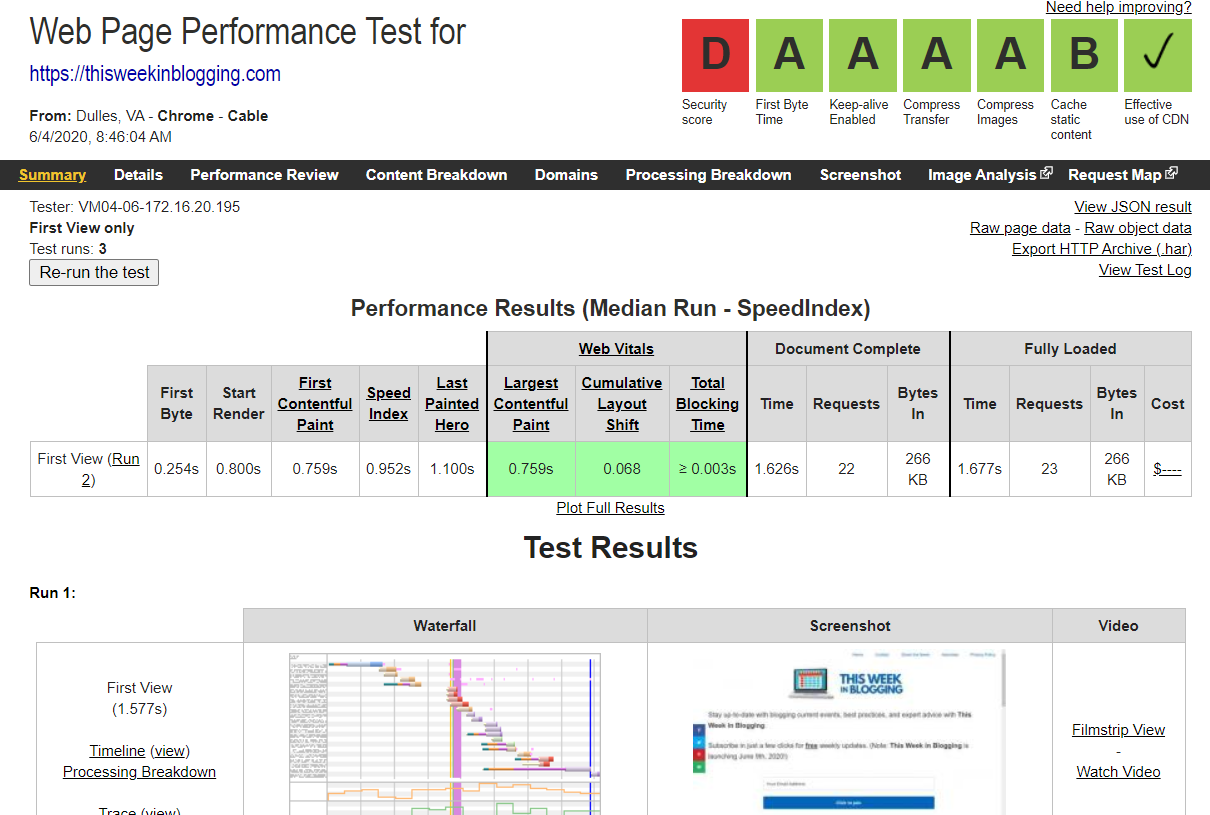
Upgrade Your Blog to Improve Performance

Check out more of our favorite blogging products and services we use to run our sites at the previous link!
How to Build a Better Blog
Looking for advice on how to improve your blog? We've got a number of articles around site optimization, SEO, and more that you may find valuable. Check out some of the following!
Right now, it really feels like influencer marketing is a competition for who can be for sale at the best price, and I really just don’t like that at all.