
Published by Jeremy. Last Updated on October 27, 2026.
Disclaimer: This Week in Blogging uses demographic data, email opt-ins, and affiliate links to operate this site. Please review our Terms and Conditions and Privacy Policy. To see more of our content, set us as a Preferred Source in Google.
When I decided to self-publish my local guidebook, I knew finding a good print service could make or break the product launch.
After discussing this with colleagues who had recently self-published, it seemed like two of the most popular choices out there were IngramSpark (a gold standard amongst bookstores) and Amazon KDP (which is the publishing arm of the biggest online retailer in the world).
As I wanted to prioritize my book getting into local stores, I started with IngramSpark and had a mostly good experience except for, you guessed it, most things surrounding Amazon. Since I wanted to also have my book available online and shipped fast via services like Amazon Prime, I also released my book on Amazon KDP, too.
So in this one, I thought I’d break down some of the pros and cons of each service to share considerations you may need to keep in mind if you’re choosing between these services for self-publishing.
IngramSpark is Good for Wholesale Orders

From everything we’ve heard from bookstores, IngramSpark is a gold standard for wholesale orders. They have an excellent reputation amongst bookstores we talked to, fast deliveries (which we’ll talk more about in the next section), and one trusted bookstore owner went as far as saying, “you’re already ahead of most publishers by using Ingram”. High praise indeed.
So if getting your book in physical stores is important to you, it is really hard to beat IngramSpark all around. Just telling stores “we’re on IngramSpark” was enough to start seeing wholesale orders come in, and I didn’t have to do much else- they knew what to do.
That said, IngramSpark’s dashboard for wholesale orders on the publisher side is, well, lacking. Apart from setting a discount percentage to extend to 3rd parties, authors receive virtually no details whatsoever. No information on which stores have purchased books (I saw some on shelves just by walking into a store and looking- I had no idea). No information on how many copies each store ordered (just a total count for all books). No breakout details at all. None. Just sales and profit made.
So while IngramSpark is great for bookstores, the publisher portal is lacking pretty much everything I would wont as an analytics-minded creator.
Conversely, if you tell a bookstore that you are printing with Amazon, well, we’ll let you finish that thought with the inevitable response that we got 100% of the time.
Amazon KDP Ships Faster
One issue I found with IngramSpark is that, for me at least, it takes quite some time for my orders to ship without paying an expedite fee. Not 1-2 days like you would expect with Amazon, but rather 1-2 weeks- with longer delays around the holidays.
In a world where instant gratification demands that orders be delivered as quickly as possible, I could see how my sales on Amazon might have been suppressed in the initial release given the longer lead times I was seeing. Would you buy a book that takes upwards of a week or longer to get delivered when a potentially comparable product can be in your hands as early as tomorrow? I doubt it.
There was a weird disconnect here because most bookstores told me they received my books directly from IngramSpark within a couple of days. One store even went into their portal to tell me how many copies of the book Ingram had on hand and was confident that if they placed an order, they could get it within a couple of days, whereas my books were taking upwards of two weeks at the time to ship. (Did my dashboard show me any of this inventory information? Of course not.)
To me, this suggests that IngramSpark may prioritize bookstores above all others, and may even have dedicated inventory on hand just for them. That said, IngramSpark does have an opportunity for authors to get their own books shipped tomorrow, we just have to pay extra, which feels a shame.
So for sales anywhere outside of wholesale orders direct to bookstores, Amazon seems to have an edge on shipping times, sometimes even significantly.
- Note: IngramSpark’s fulfillment speeds via Amazon has been all over the place for me when I have checked in the first year. Sometimes I’ve seen as short as three days and other times a fair bit longer. The fulfillment times were perhaps the worst around the holidays, which was one of the reasons why I switched to also printing with Amazon KDP in the first place- their shipping window to arrive before Christmas was much better!
IngramSpark Has More Print Options
When thinking about this one, I really wanted to say “IngramSpark has better quality prints,” and leave it at that, but I’m not sure that is exactly true.
The main difference between IngramSpark and Amazon KDP is that IngramSpark offers more print options, which is a key distinction.
When I printed my color, photo-illustrated guidebook, I picked a heavier paper weight on IngramSpark to make the prints be just a bit more professional. When I switched to Amazon KDP for fulfillment on Amazon, the paper weight I was using was not an option, and I had to downgrade to a lighter-weight paper. This was immensely noticeable in the final product. It was still good, I have to say, but after seeing the print on IngramSpark, well, it wasn’t the same.
I would probably go out on a limb and say that had I originally selected a lower paper weight tier on IngramSpark, they’d likely be functionally identical. But the lack of a mid-tier option on Amazon gives a slight edge to IngramSpark for some print cases.
For those who print black and white, or without images, this may not be as much of a problem, but in my experience with a color, illustrated book, IngramSpark has an edge for having more print options.
- This also meant I had to redesign most everything when I moved my printing over to Amazon- page bleeds, cover, and more!
Both Have Had Print Issues for Me
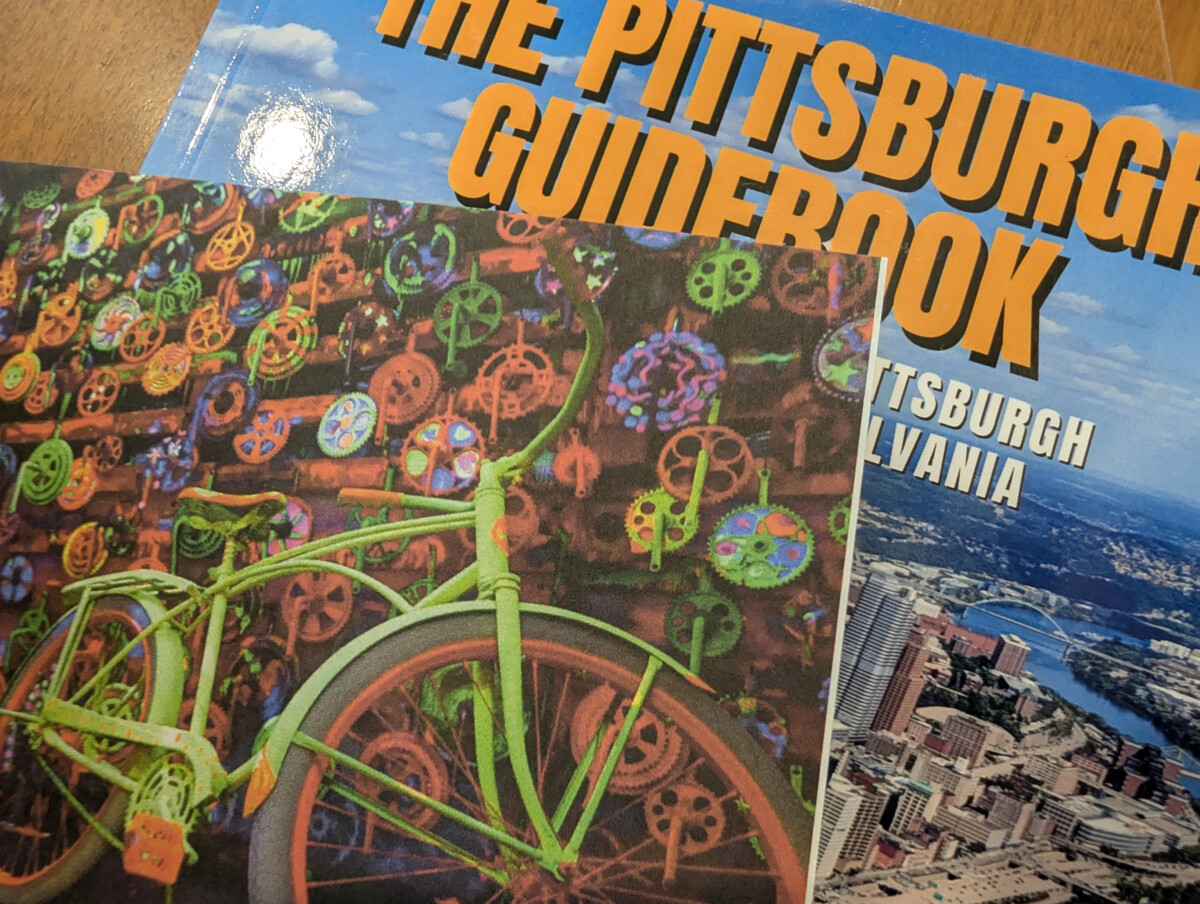
Although I like IngramSpark’s print options, I’d be remiss if I didn’t point out that both IngramSpark and Amazon KDP have given me issues with print-to-print variation.
One order from IngramSpark had 19 books where the cover was misaligned by about a quarter of an inch- well beyond the tolerance we are used to seeing. We expect some variability here, particularly noticeable around the spine, but to have an entire run be that out of alignment gave us a moment of pause. IngramSpark did refund the cost for this order, I must admit (and is easier to deal with in this regard over Amazon), but it did give me a moment of pause about what may be delivered to book stores all the same.
Conversely, a few days after that incident, a reader sent me a photo of a poor print job from Amazon, where it looked like torn pages were placed inside the binding at the start of the book. The rest of the book was fine, and I told the reader to tell Amazon they sent a damaged print to try and get a re-print shipped, but this is also a concern to me about their print quality, too. (I’ve also had others with some variation of cover and page alignments, too.)
This is perhaps the biggest headache I have with self-publishing, because I really have no control over any print-to-print variations despite all my best efforts. Hundreds of books were printed without issue, then an issue popped up, and headaches ensued.
In this respect, this is an issue with self-publishing in general as you absolutely will have print-to-print variations- so design your covers and page layouts accordingly!
- Tip: Given the variations particularly around page alignments, even with the recommended bleed layouts, I would be mindful to not have images run to the edge of a page (like I did, above) and to have a uniform cover such that if the spine shifts, it won’t be as noticeable. I will be updating my book in the future to have a panorama wrap for one single image front to back or just opt for a fixed color throughout.
Varying Pricing Models to Keep in Mind
Amazon and IngramSpark take different approaches to pricing for 3rd-party purchasers as well, which can be a bit confusing at first.
IngramSpark lets you offer a discount on wholesale orders. This includes orders by bookstores, online stores (including Amazon), etc. Think of it as the price that every and all stores pay to carry your book. They do not separate stores that maintain their own inventory (e.g. bookstores) from those that just forward print-on-demand orders (which I wouldn’t be surprised if that is what Amazon does), and to me, that’s a problem.
In my opinion, stores that take the risk of holding inventory should be able to get a better price, whereas stores that simply forward a print-on-demand order to the printer (with the long lead times that come with that) should not.
But they do give you the flexibility to set your discount percent, even if it is a blanket number across the board. For me, that was 50%. Which was 50% off to bookstores and, unfortunately, 50% off to Amazon, too. So take your sell price, multiply by 0.5, deduct your print cost, and that’s your potential profit.
- Bookstores also have a distribution fee tacked on after this discount, about 15% of the sell price on IngramSpark’s iPage, so they’re not actually getting a full 50% off, either- be careful there. My book ended up being more like 36% off for stores at the end of the day.
Amazon, on the other hand, has two tiers of fees. If you sell on Amazon directly, they only take 40% off the top. So multiply your book price by 0.6, deduct your cost, and that’s the profit you make for Amazon-based orders. Their expanded distribution, unfortunately, is a fixed 60% deduction, and you can’t change this, either. So using them for 3rd party distribution likely will cost you more than on IngramSpark in the long run.
So, depending on what wholesale rates you may be offering to stores (if you are even selling to stores to begin with), you may find that Amazon is more competitive for prints on their network, but IngramSpark can be more competitive virtually everywhere else.
Amazon does let you turn off expanded distribution; however, IngramSpark’s customer service told me that I could not turn off Amazon distribution alone and that their expanded distribution was all or nothing. So now I have two print editions on Amazon, under different ISBNs, and, thankfully, those who find the book are buying the one from Amazon (with the faster ship times) 99% of the time.
So, Who is Better? Amazon KDP or IngramSpark?
At the end of the day, both services have their strengths and their weaknesses, so much so that many authors use both!
I admit that I wish I had read more into this one before jumping into things.
IngramSpark is often considered to be the gold standard for bookstores, with more print options, a customizable discount percentage, and more.
But for everything outside of brick & mortar stores buying on wholesale, prints can take quite some time to ship (or you have to pay a fee to ship faster), all 3rd parties seem to get the same wholesale discount (even Amazon), and seemingly has hidden fees that eat into wholesale discount rates for stores. This makes it really difficult to be competitive in the online shopping space, in my opinion.
Amazon KDP is great for selling on Amazon directly, as they offer decent profit share for direct orders, faster fulfillment, and, for me at least, cheaper print costs.
But that print cost variation that I saw was the result of Amazon using lighter-weight paper than what I was using on IngramSpark, so I would argue that the quality was, to a small degree, not as good. I wouldn’t say the quality was bad, just that the format I had printed on with IngramSpark was better, and I could only really tell a difference when looking at both side-by-side.
Would I have paid a bit more in cost for better quality? Yes. But do I get over it with extra profit per sale? Also yes.
Ultimately, you may want to use both services when publishing a book. Publishing on IngramSpark makes sense if you want a 3rd party to handle distribution to bookstores, where you offer generous wholesale discounts to encourage orders. Publishing on Amazon makes sense if you want to tap into their broad marketplace, get faster delivery, and possibly a greater profit share for orders on their network- if you are okay with the available print quality options, that is.
Running everything through a single printer is where trouble could arise, as there is no real one-size-fits-all solution in the self-publishing world. If you go all in with IngramSpark, you have risks on orders with Amazon for being slower delivery and giving them a higher-chunk of the profit if you discount your books more than 40% off. If you go all in with Amazon, you may face extra hurdles when selling wholesale, lower profits from expanded distribution, and less access to higher-quality print options.
So, therein lies the question. Are you prioritizing direct sales (i.e. selling on your own website and fulfilling directly) and brick-and-mortar distribution? If so, IngramSpark is a great service. Are you prioritizing Amazon’s marketplace for shoppers looking for fast delivery? If so, Amazon KDP is for you. Do you want everything? You’re probably going to want to consider using both, and that’s all there is to it.
Join This Week in Blogging Today
Join This Week in Blogging to receive our newsletter with blogging news, expert tips and advice, product reviews, giveaways, and more. New editions each Tuesday!
Can't wait til Tuesday? Check out our Latest Edition here!

Looking to learn more about Stay22? Download our free Stay22 handbook to get the most out of the affiliate network!
Upgrade Your Blog to Improve Performance



Check out more of our favorite blogging products and services we use to run our sites at the previous link!
How to Build a Better Blog
Looking for advice on how to improve your blog? We've got a number of articles around site optimization, SEO, and more that you may find valuable. Check out some of the following!